Monday, May 22, 2024

When bulk structural silicone sealant lowers façade project costs
by
Published
Views:
Buying structural silicone sealant bulk can lower a façade budget, but only when the project has enough repeatable work, the right storage conditions, and a supplier that can hold product consistency from the first elevation to the last. A lower price per litre is useful. It is not, by itself, a cost-saving strategy.
On curtain wall, window wall, and glazed façade packages, sealant cost is usually a small line item compared with glazing, aluminum, access equipment, labour, and the financial exposure of a remedial repair. That is exactly why bulk purchasing needs careful evaluation. A small material saving can disappear quickly if cartridges create excess waste, a batch does not match the approved system, delivery arrives late, or the installation crew loses time dealing with unsuitable packaging.
The practical question is not “Can we get a discount for volume?” It is “Will a bulk supply model reduce the installed and lifecycle cost of this specific façade scope?”
When structural silicone sealant bulk purchasing genuinely saves money
Bulk supply works best on projects with substantial, predictable sealant consumption. A large unitized curtain wall installation, a long-running stick-built façade programme, or a standardized multi-building development may use enough structural silicone to justify moving away from individual cartridges or small packs.
The savings usually come from several places at once:
- Lower material cost per unit: suppliers may offer better pricing when production, handling, and freight can be planned around a committed volume.
- Less packaging waste: larger packs or drum systems can reduce the amount of packaging discarded for every linear metre of glazing work.
- Fewer work interruptions: installers spend less time opening, changing, and disposing of individual cartridges when a compatible bulk-dispensing arrangement is in place.
- More stable supply planning: confirmed call-off schedules can reduce emergency orders, split deliveries, and last-minute substitution risk.
- Batch control: a managed bulk programme can make it easier to track product batches, expiry dates, and test records across the project.
These benefits are strongest when the sealant design, glazing sequence, installation rate, and release schedule are reasonably stable. If the façade package is still changing weekly, buying a large volume too early can turn an apparent discount into inventory risk.
A useful rule is simple: bulk purchasing should be tied to a consumption forecast that the project team can defend, not just to an attractive supplier quotation.
The cheapest quote may increase installed cost
Structural silicone is part of a safety-critical glazing system. It transfers loads in specified structural glazing applications and must perform within the approved façade design. This makes it different from a general-purpose weatherseal or a low-risk interior adhesive.
Two offers can look comparable on a price sheet while carrying very different project costs. One supplier may include technical submittals, batch traceability, compatible primers where required, application support, and a realistic delivery schedule. Another may only offer a low nominal price for sealant in a format that does not match the contractor’s equipment or production workflow.
There is also a common misunderstanding around coverage calculations. Theoretical yield is not actual site yield. Actual consumption is affected by joint dimensions, glass tolerances, applicator settings, purging losses, starting and stopping work, rejected units, temperature, and crew practices. A lower-cost product that produces more waste can be more expensive per completed panel.
Before comparing bids, convert them into an installed-cost view. That means looking beyond price per cartridge, sausage, pail, or drum.
That comparison is more work than selecting the lowest unit price, but it is the work that prevents a false saving.
Bulk format only works when the application process is ready
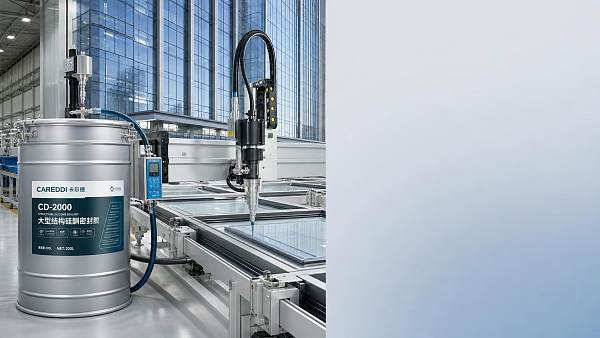
Many buying decisions focus on the sealant itself and leave packaging until the end. That is backwards. Packaging and dispensing are part of the production system.
For a controlled factory glazing line, bulk structural silicone can be a sensible choice. Consumption is measured, operators use the same equipment each day, and curing conditions can be monitored. The bulk format may improve throughput and make material use more predictable.
For fragmented site work, remote elevations, small repair packages, or intermittent glazing activities, cartridges or sausages can remain the more economical option. They are easier to deploy, require less specialist equipment, and reduce the chance that opened material will be wasted before use. Bulk is not automatically better merely because the total contract value is large.
Ask a direct operational question: can the team consume the opened product within the manufacturer’s stated working-life requirements, using equipment that is approved or suitable for the material? If the answer is uncertain, the cost model should include waste and downtime rather than assuming ideal use.
Do not trade specification compliance for a volume discount
A structural silicone selection must start with the project specification, façade engineer’s requirements, substrate compatibility, and approved system details. Procurement should not treat “silicone” as a single interchangeable commodity category.
Different products may vary in cure mechanism, movement capability, adhesion behaviour, colour availability, compatibility requirements, and suitability for particular substrates or insulating glass systems. The relevant product data, technical approvals, and project-specific testing requirements need review by the appropriate technical parties. Where a project calls for adhesion testing, compatibility testing, or a manufacturer’s review of the structural glazing detail, those steps should be built into the purchase schedule.
This is where a low-cost substitute often creates the greatest risk. A product may appear similar in a catalogue but be unsupported for the exact glass, coating, spacer, gasket, frame finish, primer, or cleaning process used in the project. Remedial work after a failed compatibility review is expensive. Remedial work after installation is worse.
For contract protection, the purchase order should clearly identify the approved product, packaging format, colour where applicable, shelf-life expectations at delivery, required documentation, and the procedure for any proposed substitution. “Equivalent” should not be accepted as a purchasing description without technical confirmation.
Forecast consumption before negotiating the bulk deal
Good negotiations are based on a usable forecast. Start with the approved drawings and joint design, then estimate sealant volume by façade type rather than relying on a single project-wide average. Vision units, spandrel areas, corner conditions, operable windows, and special geometries can consume material at different rates.
Next, separate the requirement into phases. The amount needed in the next four weeks matters more than a headline annual total if storage space is limited or programme dates are uncertain. A staged call-off agreement is often stronger than taking immediate delivery of the entire volume.
There are four practical figures worth tracking:
- Approved net consumption based on joint geometry.
- Expected operational waste based on the real application method.
- Minimum usable shelf life required when material reaches the factory or site.
- Weekly or monthly consumption linked to the installation programme.
The last figure changes the negotiation. Instead of asking for a discount on a large one-time shipment, the buyer can seek fixed pricing, reserved production capacity, defined delivery windows, and batch continuity across scheduled releases. That arrangement may be more valuable than a slightly deeper up-front discount because it protects both cash flow and programme certainty.
Storage is a cost issue, not a warehouse detail
Sealant inventory has a limited usable life and must be kept in conditions specified by the manufacturer. Purchasing too far ahead can create an avoidable problem: material arrives within date, but too much of its usable life has been consumed before it reaches the glazing line.
That risk is higher when a project has delayed approvals, overseas transport, phased construction, or limited climate-controlled storage. It also rises when bulk containers are ordered to meet a supplier’s minimum quantity rather than the project’s real demand.
Receiving checks should record product identification, batch or lot details, manufacture date where provided, expiry date, package condition, and quantity. First-expiry, first-out control is preferable to simply using the newest material first. These are ordinary warehouse disciplines, yet they have direct financial value when the material is high-performance and project-specific.
Supplier reliability changes the true cost of bulk sealant
Structural silicone procurement is not only a product transaction. A façade contractor may depend on a supplier’s ability to maintain the same product specification, provide traceable documentation, respond to technical questions, and deliver against a changing construction programme.
For international projects, the risk assessment should include manufacturing location, shipping routes, local stock availability, import documentation, and the practical time needed to replace a delayed batch. A supplier with a lower price but no realistic recovery plan can expose the project to expensive labour idle time.
Global Industrial Matrix (GIM) is relevant here as a technical benchmarking and industrial intelligence reference point rather than a sealant vendor. Its cross-sector approach can help decision-makers frame supply continuity, standards alignment, and documentation risk as procurement variables. The same discipline used to assess critical industrial components applies to façade materials: compare verifiable specifications, manufacturing capability, supply-chain exposure, and quality records instead of relying on a headline quote.
That does not replace project-specific approval or manufacturer documentation. It does encourage a better buying habit: treat technical integrity and supply reliability as measurable parts of cost.
A sensible decision framework
Bulk purchasing is usually justified when the project has high, repeatable demand; a stable installation programme; compatible dispensing equipment; competent material handling; adequate storage; and a supplier capable of supporting the approved specification over time.
It is usually a poor fit for short repair scopes, highly uncertain programmes, scattered site works, small quantities with limited storage, or projects where the sealant system has not yet received the necessary technical confirmation. In those cases, a higher unit price may be cheaper than surplus stock, expired material, improvised handling, or a substitution dispute.
One final check helps prevent a costly decision: ask the commercial team, installation lead, quality manager, and technical approver to review the same comparison. They will see different risks. Commercial teams see price and payment terms; installers see handling time; quality teams see traceability; technical reviewers see system compatibility. A bulk agreement is strongest when those views align.
FAQ
Is bulk structural silicone always cheaper than cartridges?
No. It may cost less per unit, but the installed cost can be higher if equipment, labour, storage, or material waste are not properly controlled. Compare cost per completed façade unit, not only cost per package.
How much sealant volume is enough to justify bulk buying?
There is no universal threshold. The decision depends on repeatable consumption, packaging options, equipment availability, delivery frequency, and how much product can be used within its stated shelf-life and handling requirements.
Can a lower-priced sealant be substituted if it meets a general silicone description?
Not without the required technical review. Structural glazing products must match the approved system and project requirements. General similarity in product type is not evidence of compatibility or acceptance.
What should be included in a bulk supply agreement?
Include the exact approved product, packaging, planned call-off quantities, delivery dates, shelf-life expectations, batch traceability, documentation requirements, pricing terms, and a defined process for substitutions or supply disruptions.
What is the biggest procurement mistake with structural silicone sealant bulk orders?
Ordering the maximum discounted quantity before confirming actual consumption, storage capacity, programme stability, and technical approval. Excess inventory can erase the initial saving.
Used with the right production plan, structural silicone sealant bulk purchasing can reduce façade project costs through lower unit pricing, better workflow, and more reliable supply. Used simply to chase the lowest quote, it can add waste and technical risk. The sound decision is the one that protects installed cost, compliance, and long-term façade performance at the same time.
The Archive Newsletter
Critical industrial intelligence delivered every Tuesday. Peer-reviewed summaries of the week's most impactful logistics and market shifts.