
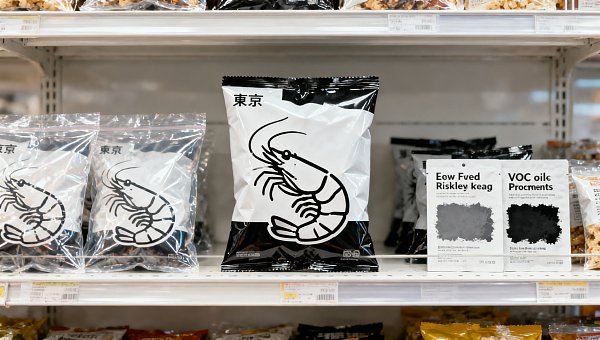
On June 1, 2026, Calbee began offering a black-and-white version of its shrimp snack packaging in Tokyo supermarkets, with a label indicating packaging designed to save petroleum-based raw materials. The move is worth attention for fast-moving consumer goods importers, food-grade packaging suppliers, plastic injection mold makers, printing supply chains, and companies exporting to Japan and South Korea because it links packaging appearance, ink availability, VOC control, and sustainable procurement requirements in one visible market response.
Event Overview
According to the provided event information, the escalation of the Middle East situation has led to unstable global supply of printing inks derived from naphtha. In response, Calbee introduced black-and-white shrimp snack packaging in Tokyo supermarkets from June 1, 2026.
The packaging is marked as using petroleum-based raw material saving packaging. The currently disclosed information indicates that this packaging change is connected to the shortage and instability of naphtha-based printing ink supply.
The same information also states that Japanese FMCG importers are systematically re-examining packaging compliance and sustainable procurement standards. For suppliers of plastic injection molds and food-grade packaging components exporting to the Japanese and South Korean markets, the update points to new certification requirements related to VOC control and compatibility with bio-based inks.
Affected Sub-sectors and Supply Chain Roles
FMCG Importers Serving Japan and South Korea
FMCG importers are affected because packaging is not only a marketing carrier but also a compliance and procurement item. When a consumer brand changes visible retail packaging due to ink supply pressure, importers serving the Japanese and South Korean markets may need to review whether current packaging specifications can continue to meet customer expectations and market requirements.
From an industry perspective, the impact is likely to appear in packaging approval procedures, supplier documentation, and communication with downstream retail channels. Importers may face more questions about ink composition, petroleum-based raw material use, VOC-related controls, and whether alternative printing solutions are available when conventional ink supply becomes unstable.
Printing Ink and Packaging Material Procurement Teams
Procurement teams are directly exposed because the reported disruption concerns naphtha-derived printing ink. If supply is unstable, buyers may need to reassess reliance on petroleum-derived ink systems and review whether approved alternatives can be used without affecting food-grade packaging compliance.
Analysis shows that the main pressure is not limited to price or availability. It also involves whether alternative inks can be matched with existing films, coatings, labels, and printing processes. For companies supplying food packaging, procurement decisions may increasingly require coordination with quality, regulatory, and customer approval teams.
Food-grade Packaging Component Suppliers
Food-grade packaging component suppliers are affected because the event highlights a shift from ordinary packaging supply toward more documented packaging compliance. The disclosed information specifically mentions new certification requirements related to VOC control and compatibility with bio-based inks for suppliers exporting to Japan and South Korea.
What deserves closer attention now is whether suppliers can provide evidence that their components are suitable for lower-VOC or bio-based ink systems. This may influence material selection, production validation, customer audits, and export documentation for packaging parts used in food and consumer goods.
Plastic Injection Mold and Molded Component Suppliers
Plastic injection mold suppliers may not be directly involved in ink production, but they are connected to the wider packaging component supply chain. The event information specifically includes plastic injection mold suppliers exporting to Japan and South Korea among the businesses facing new certification expectations.
From an industry perspective, this means mold and component suppliers may need to consider how their products interact with printed, labeled, or decorated packaging systems. The impact may appear in customer requirements for material compatibility, surface treatment, traceability, and supporting compliance documents related to sustainable packaging programs.
Printing, Converting, and Supply Chain Service Providers
Printing and converting service providers are affected because a switch to black-and-white packaging suggests that print complexity and ink usage can become part of supply chain resilience planning. Logistics and supply chain service providers may also need to track packaging changes when product appearance, labeling, or material declarations are adjusted.
Observably, the impact is not only operational. It also concerns how quickly suppliers can respond when brands or importers request packaging simplification, alternative ink validation, or updated compliance files for specific destination markets.
Key Points to Watch and Practical Responses
Track Official Statements and Customer Requirements
Companies should continue monitoring official brand statements, retailer requirements, and importer specifications related to packaging changes. The current information confirms Calbee’s black-and-white packaging launch in Tokyo supermarkets and links it to naphtha-derived ink supply instability, but further market responses still need observation.
For practical preparation, suppliers should keep current packaging specifications, ink declarations, and raw material information ready for customer review. This is especially important for companies already exporting to Japan and South Korea or preparing to enter those markets.
Review High-risk Packaging Items and Export Markets
Businesses should identify packaging items that rely heavily on petroleum-derived printing inks, multi-color designs, or frequent graphic changes. These items may face greater pressure if buyers begin asking for simplified printing, alternative ink systems, or evidence of petroleum-based raw material reduction.
It is more appropriate to understand this as a market-specific compliance and procurement signal rather than a universal packaging replacement. Companies should prioritize Japan- and South Korea-related business lines, food-grade packaging components, and parts linked to retail-ready consumer products.
Separate Supply Risk Signals from Confirmed Compliance Changes
Analysis shows that the event points to a stronger focus on VOC control and bio-based ink compatibility, but companies should avoid treating every market signal as an immediate mandatory rule unless confirmed by customers or authorities. The practical step is to distinguish between confirmed purchase specifications, customer audit requests, and broader market discussions.
Suppliers can prepare by mapping which existing products already have VOC-related documentation, which materials may require retesting, and which customers may request bio-based ink compatibility confirmation. This helps avoid rushed changes while keeping response capability in place.
Prepare Alternative Ink and Packaging Validation Plans
Packaging manufacturers and component suppliers should prepare validation plans for alternative ink systems, especially where food-grade applications are involved. The focus should be on compatibility, documentation, and customer approval rather than simple substitution.
From an industry perspective, a practical response includes communicating early with ink suppliers, converters, mold makers, and import customers. If packaging artwork, surface treatment, or label materials need to change, the approval chain should be clarified before urgent orders arise.
Editor’s View / Industry Observation
Observably, Calbee’s black-and-white shrimp snack packaging in Tokyo is more than a visual packaging adjustment. It reflects how upstream raw material uncertainty can move quickly into retail packaging decisions and then into supplier qualification requirements.
Analysis shows that the event is better understood as an early signal rather than a fully settled industry outcome. The confirmed fact is the packaging launch in Tokyo supermarkets on June 1, 2026, under the context of unstable naphtha-derived printing ink supply. The broader implications for VOC control, bio-based ink compatibility, and sustainable procurement standards still require continued tracking through customer requirements and official market communication.
What deserves closer attention now is the connection between packaging compliance and export supply chains. Suppliers that previously focused mainly on cost, delivery, and physical packaging performance may increasingly need to demonstrate how their products fit into lower-VOC, alternative-ink, and petroleum-saving packaging strategies.
Conclusion
The Calbee packaging update highlights a practical industry issue: instability in naphtha-derived printing ink supply can influence packaging design, procurement standards, and supplier certification expectations in key Asian consumer markets. For exporters of plastic injection molds, food-grade packaging components, and related packaging materials, the event should be treated as a prompt to review documentation, material compatibility, and customer communication procedures.
It is more appropriate to understand this information as a supply chain and compliance signal at the current stage. Companies do not need to overreact, but they should prepare for more detailed questions from Japanese and South Korean buyers regarding VOC control, bio-based ink adaptability, and sustainable packaging procurement.
Information Source Statement
Main source: Provided event information on Calbee’s black-and-white shrimp snack packaging launch in Tokyo on June 1, 2026, and the related naphtha-derived printing ink supply issue.
Items for continued observation: further official statements from relevant brands, customer-specific packaging requirements in Japan and South Korea, and any confirmed certification requirements related to VOC control and bio-based ink compatibility.
