Monday, May 22, 2024

Handling Technology Trends Reshaping Factory Throughput
by
Published
Views:
Handling technology trends is now central to improving factory throughput across complex manufacturing environments. For project managers and engineering leaders, the challenge is no longer isolated equipment upgrades but aligning automation, data transparency, quality standards, and supply chain resilience into one operational strategy.
This article explains which shifts matter most, how they affect throughput in practice, and what leaders should prioritize to protect efficiency, flexibility, and long-term competitiveness.
What Project Leaders Are Really Trying to Solve
When readers search for handling technology in the context of factory throughput, they are usually not looking for a narrow equipment definition. They want to understand which technology decisions can remove bottlenecks, reduce downtime, and increase output without creating new operational risk.
For project managers and engineering leads, throughput is rarely constrained by one machine alone. It is shaped by material flow, labor availability, equipment reliability, changeover speed, data visibility, quality discipline, and the resilience of upstream suppliers.
That is why handling technology trends matter. Modern handling systems now connect mechanical movement, industrial software, sensing, traceability, and predictive decision-making. The companies that benefit most are those treating handling technology as part of a broader production architecture rather than a stand-alone automation purchase.
The overall judgment is clear: factory throughput improves most when handling technology investments are tied to measurable flow constraints, standardization goals, and cross-functional execution. The wrong approach is buying advanced systems before clarifying where throughput is actually being lost.
Why Throughput Has Become a Systems Problem, Not a Line Problem
In many factories, throughput planning used to focus on direct production equipment. Today, that view is too limited. A line may be technically capable of higher output, yet actual throughput remains low because materials arrive late, buffers are poorly balanced, or inspection and packaging cannot keep pace.
This is especially true in mixed manufacturing environments where electronics, mobility systems, precision parts, smart agriculture components, and environmental infrastructure products share suppliers, quality frameworks, and volatile demand patterns.
As industries converge, handling technology has expanded from conveyors, lifts, and robotic transfer systems into a coordination layer that links warehouse logic, machine status, production scheduling, and quality checkpoints.
For decision-makers, the key implication is simple: throughput gains now depend on how well handling systems interact with the rest of the factory. A fast robot or automated guided vehicle does not solve much if data latency, poor part traceability, or unstable work instructions still disrupt flow.
The Handling Technology Trends Reshaping Factory Throughput
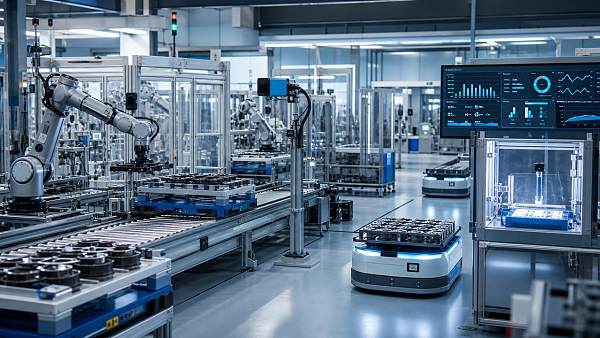
Several trends are now having the strongest impact on throughput performance. The first is intelligent automation that adapts to changing production conditions. Instead of fixed-path, fixed-sequence handling, factories are adopting flexible robotic cells, autonomous mobile robots, and software-directed material routing.
This flexibility matters because modern production volumes are less predictable. Product mix changes more often, batch sizes shrink, and engineering revisions move faster. Handling systems that can be reconfigured quickly protect throughput during these transitions.
The second trend is end-to-end visibility. Sensors, machine connectivity, MES platforms, and digital dashboards now allow project teams to monitor where work-in-progress accumulates, where idle time emerges, and where micro-stoppages quietly erode output.
The third trend is tighter integration between handling technology and quality control. In sectors governed by standards such as ISO, IATF, and IPC, throughput is not just about speed. It is about moving parts correctly, documenting movement, and preventing defects from progressing downstream.
The fourth trend is predictive maintenance embedded into material handling assets. Conveyors, sortation units, lifts, and robotic grippers all generate useful operating data. When that data is analyzed well, teams can service components before failure disrupts production.
The fifth trend is supply chain-aware factory design. Because material shortages and logistics disruptions remain common, leading plants are building handling strategies that support alternate sourcing, dynamic storage, and fast rebalancing of internal flow.
Where Throughput Is Usually Lost Before Leaders Notice
Many factories measure overall equipment effectiveness, yet still miss the real causes of throughput loss. One common issue is transition delay between production stages. Material may sit waiting for transport, identification, inspection release, or operator confirmation.
Another hidden loss comes from mismatch between automated speed and process readiness. A transfer system may move faster than downstream testing, labeling, or assembly can absorb. The result is not higher throughput but recurring congestion.
Project leaders should also watch for throughput loss caused by inconsistent data definitions. If inventory systems, machine controllers, and planning tools classify jobs differently, teams spend valuable time reconciling statuses instead of sustaining flow.
Handling technology decisions should therefore begin with a constraint map. Identify where output slows, what triggers the delay, how often the condition repeats, and whether the root cause is physical movement, information lag, quality hold, or scheduling conflict.
This discipline prevents expensive misallocation of capital. In many plants, the biggest throughput gain comes not from adding another robot, but from redesigning staging logic, improving carrier traceability, or synchronizing release rules across departments.
How to Evaluate Handling Technology Investments in Practical Terms
For managers responsible for budgets and delivery targets, the right question is not whether a technology is advanced. The right question is whether it solves a proven throughput constraint within acceptable risk, cost, and implementation effort.
Start with baseline metrics. Measure cycle time by process step, transfer time between operations, queue duration, first-pass yield, unplanned downtime, and changeover recovery time. Without this baseline, post-investment value becomes difficult to verify.
Next, evaluate fit with production variability. Some handling systems perform well in stable, repetitive environments but lose efficiency in high-mix production. Others are designed for flexibility but require stronger software governance and operator training.
Interoperability is another critical factor. New handling technology should integrate with existing ERP, MES, SCADA, WMS, and quality systems wherever possible. If integration is weak, local efficiency may improve while plant-wide coordination becomes harder.
Leaders should also model failure scenarios. Ask what happens if a mobile robot fleet loses network connection, if a scanner fails, if a gripper wears early, or if a supplier changes packaging dimensions. Resilient throughput depends on graceful degradation, not perfect conditions.
Finally, assess total cost of ownership rather than purchase price alone. Include implementation time, software support, spare parts, maintenance skill requirements, cybersecurity exposure, validation effort, and the cost of operational disruption during ramp-up.
What Business Value Project Managers Should Expect
When handling technology is deployed well, the most visible gain is higher throughput. But for project leaders, the larger value often comes from better predictability. Reliable flow improves schedule adherence, customer delivery confidence, and coordination across procurement, production, and quality teams.
Another major benefit is labor efficiency. This does not simply mean replacing people. In many cases, it means reallocating skilled operators from repetitive transport and manual tracking tasks toward quality-critical, technical, or problem-solving activities.
Improved handling technology can also reduce scrap and rework. Better positioning, gentler transfer, accurate sequencing, and stronger traceability help prevent damage, part mix-ups, and unauthorized process deviations.
For organizations managing multiple product families or global manufacturing footprints, standardized handling architectures create benchmarking value. Comparable data across sites makes it easier to identify why one line outperforms another and where process discipline is breaking down.
There is also a resilience benefit. A factory with transparent, flexible handling systems can usually adapt faster to engineering changes, demand swings, and supplier disruptions than a plant still dependent on rigid manual flow and fragmented information.
Implementation Priorities That Separate Results From Hype
Not every technology trend deserves immediate deployment. The strongest results usually come from sequencing decisions correctly. First, stabilize process definitions and data standards. If routing, part IDs, and operating states are inconsistent, automation will only accelerate confusion.
Second, focus on the worst throughput constraints rather than broad transformation language. A targeted pilot around one transfer bottleneck, one inspection queue, or one high-mix staging problem can generate clearer learning than an overly ambitious full-site rollout.
Third, involve operations, maintenance, quality, IT, and procurement from the start. Handling technology sits at the intersection of these functions. Projects fail when engineering optimizes movement logic but overlooks spare parts strategy, cybersecurity requirements, or operator usability.
Fourth, define acceptance criteria in operational terms. Success should not be measured only by installation completion or automation uptime. It should be tied to flow improvement, downtime reduction, labor redeployment, first-pass quality, and schedule performance.
Fifth, plan for change management. Even technically strong systems underperform when teams do not trust the data, bypass workflows, or fall back to manual workarounds during pressure periods. Training and governance are part of throughput engineering.
How Cross-Sector Benchmarking Improves Decision Quality
One reason handling technology decisions are difficult is that useful lessons no longer come from a single industry alone. Electronics plants, automotive lines, agri-tech equipment makers, and infrastructure component manufacturers all face different product realities, yet increasingly share similar flow challenges.
Cross-sector benchmarking helps leaders avoid blind spots. For example, traceability methods common in semiconductor and electronics environments may improve defect containment in mobility systems. Robust validation disciplines from automotive can strengthen throughput stability in smart agri-tech assembly.
Likewise, ESG-driven infrastructure operations often bring strong thinking around energy use, maintenance life, and environmental operating conditions. These insights can influence how handling equipment is selected for durability, efficiency, and long-term operational risk.
For project managers, benchmarking should be more than collecting vendor claims. It should compare cycle performance, compliance demands, maintenance burden, reconfiguration speed, digital integration maturity, and failure response across similar use cases.
This broader perspective supports better capital allocation. It helps organizations distinguish between technologies that are truly scalable and those that perform well only in highly controlled demonstration settings.
Conclusion: Throughput Improvement Starts With Better Handling Decisions
Handling technology is no longer a secondary factory function. It has become a strategic lever for throughput, quality stability, labor efficiency, and supply chain responsiveness. For project managers and engineering leaders, that means investment decisions must be grounded in operational constraints, not technology fashion.
The most effective approach is to treat handling technology as part of an integrated production system. Map where throughput is truly lost, prioritize data visibility, evaluate interoperability, and align automation with quality and resilience requirements.
Factories that follow this path are better positioned to increase output without sacrificing control. They also gain something equally important: the ability to adapt as products, standards, and supply conditions continue to change.
In a manufacturing landscape defined by convergence and complexity, better handling technology decisions do more than move materials. They help move the entire operation toward higher confidence, stronger performance, and more durable competitive advantage.

The Archive Newsletter
Critical industrial intelligence delivered every Tuesday. Peer-reviewed summaries of the week's most impactful logistics and market shifts.