Monday, May 22, 2024

Auto AI Expo Signals New Chip Compliance Priorities
by
Published
Views:
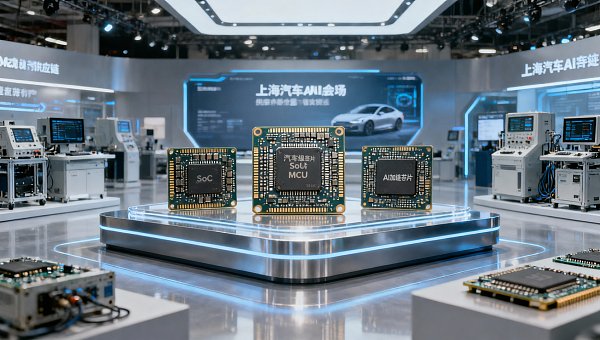
At the close of the 2026 Future Automotive AI Expo in Shanghai on June 21, 2026, newly disclosed delivery data pointed to a practical shift in how automotive chips are being evaluated and prioritized in the market. The rise in mass-production deliveries of Chinese automotive-grade MCU, SoC, and AI accelerator chips, together with shorter lead times and higher priority for chips supporting AUTOSAR Adaptive and ISO 21434 cybersecurity architecture, is worth watching not only as a supply update, but also as a signal for procurement criteria, compliance reviews, technical sourcing, and delivery planning across the automotive electronics chain.
What the Expo Data Confirmed
According to information disclosed by the event organizer at the conclusion of the 2026 Future Automotive AI Expo, the share of mass-production deliveries accounted for by Chinese automotive-grade MCU, SoC, and AI accelerator chips reached 38% in 2026, compared with 29% in 2025.
The same disclosure stated that the average lead time for mainstream models fell from 14 weeks to 6 weeks.
It was also stated that chips supporting AUTOSAR Adaptive and ISO 21434 cybersecurity architecture were given the highest delivery priority.
Why Procurement and Compliance Teams May Read This Differently
Technical sourcing is becoming more standards-sensitive
From an industry perspective, OEMs, Tier suppliers, and other chip buyers may be affected because delivery priority is no longer reflected only in capacity and availability. The disclosed preference for chips aligned with AUTOSAR Adaptive and ISO 21434 suggests that technical architecture support and cybersecurity readiness may increasingly influence sourcing decisions, model selection, and supplier screening.
For procurement teams, what deserves closer attention is whether future RFQs, technical bid documents, and component approval materials place greater emphasis on software architecture compatibility, cybersecurity design documentation, and evidence of standards alignment.
Manufacturing schedules may adjust to a shorter supply cycle
Processing and manufacturing participants may also feel the impact because a reduction in average lead time from 14 weeks to 6 weeks can change planning assumptions in production scheduling, inventory buffers, and engineering change timing. This does not by itself establish a new industry rule, but it may affect how factories, module integrators, and contract manufacturers set ordering windows and delivery coordination practices.
In practical terms, businesses should pay attention to whether shorter lead times begin to reshape purchase order cadence, safety stock logic, and supplier commitment terms in automotive electronics programs.
Testing, certification, and documentation roles may gain weight
For certification-related firms, testing service providers, and quality teams, the priority given to chips supporting AUTOSAR Adaptive and ISO 21434 may increase attention on technical files, validation records, and traceable compliance materials. Even where no new formal regulation is cited in the event disclosure, market participants may begin to treat standards support as a stronger entry condition in project qualification and delivery acceptance.
This means the business impact may appear in document review, specification alignment, audit preparation, and after-sales traceability rather than only in chip selection itself.
What Companies Should Watch Next
Check whether standards support is moving into binding procurement language
Analysis shows that companies should closely monitor whether AUTOSAR Adaptive and ISO 21434 references begin to appear more explicitly in sourcing documents, nomination requirements, and model-based technical specifications. If that language becomes more common, standards support may shift from a preference signal into a practical precondition for participation in some projects.
Review technical files and supplier qualification materials
Suppliers and purchasing teams should revisit the completeness of technical descriptions, cybersecurity architecture statements, validation records, and product qualification materials tied to automotive-grade MCU, SoC, and AI accelerator offerings. The event disclosure does not define a mandatory documentation checklist, so this remains an area for active monitoring rather than a confirmed compliance outcome.
Reassess lead-time assumptions in contracts and planning
Companies involved in delivery planning, supply-chain services, and production coordination should examine whether their internal assumptions still reflect longer chip lead cycles. Observably, if six-week lead times become a more stable market reference for mainstream models, businesses may need to adjust ordering rhythm, buffer strategies, and customer delivery commitments.
Track export, after-sales, and traceability implications carefully
For exporters, channel operators, and after-sales service teams, the key issue is not to assume that faster supply automatically removes compliance risk. It is more appropriate to monitor how product traceability, technical declarations, and post-delivery support expectations evolve when standards-supported chips receive higher delivery priority.
How This Signal Should Be Interpreted
Analysis shows that this development is better understood as an execution signal from the market than as proof of a newly issued regulation. The disclosed data connect supply performance with standards-related delivery preference, which may indicate that compliance architecture is becoming more visible in commercial execution.
At the same time, the current information does not establish a formal legal mandate, a published regulatory text, or a uniform procurement rule across the industry. For that reason, continued observation is needed around implementation language, certification interpretation, technical tender wording, and feedback from actual purchasing programs.
A Practical Reading of the Market Shift
The most relevant takeaway is that this expo update does more than describe improving domestic chip supply. It suggests that delivery advantage is increasingly associated with recognized software and cybersecurity architecture support, which can affect sourcing, qualification, and execution across multiple business functions.
For now, it is more appropriate to understand this as a concrete market signal with compliance implications rather than as a fully settled rule change. Companies should therefore remain cautious, document-focused, and attentive to how procurement practice and standards expectations continue to develop.
Basis of This Article
This article is based on the user-provided news title, event date, and event summary concerning the close of the 2026 Future Automotive AI Expo in Shanghai on June 21, 2026, including the disclosed figures on domestic automotive-grade chip delivery share, lead-time compression, and delivery priority for chips supporting AUTOSAR Adaptive and ISO 21434.
For this type of development, commonly relevant source categories may include official event disclosures, regulatory publications, trade or customs authorities, industry association updates, standards organization documents, and reporting by established industry media. A specific official source link was not provided in the input, so further verification remains necessary.
What still needs continued observation includes any later policy detail, certification interpretation, procurement document changes, technical tender wording, industry feedback, and how companies ultimately apply these signals in real sourcing and delivery decisions.

The Archive Newsletter
Critical industrial intelligence delivered every Tuesday. Peer-reviewed summaries of the week's most impactful logistics and market shifts.