Monday, May 22, 2024

PSA Requires Carbon Labels on Water Treatment Cargo
by
Published
Views:
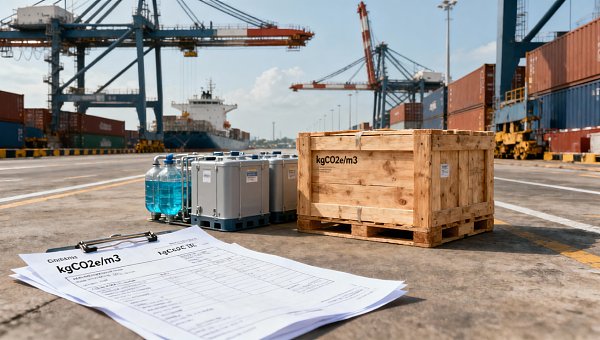
On June 22, 2026, Singapore's PSA put its ESG Monitor manifest visualization system into operation and tied cargo release for certain water treatment equipment to a new document disclosure requirement. For shipments transiting through or imported into Singapore, certified unit treatment carbon intensity values in kgCO₂e/m³ now need to appear in both the bill of lading and packing list, making this a practical compliance issue for exporters, importers, logistics providers, procurement teams, and documentation staff handling covered equipment.
What the new manifest requirement confirms
The confirmed change is procedural and document-based. PSA has officially launched the ESG Monitor system, and the requirement applies to water treatment equipment moving through Singapore in transit or for import.
The event summary specifically identifies MBR membrane modules, integrated wastewater treatment modules, and intelligent chemical dosing pump stations among the covered equipment categories.
For those shipments, the certified unit treatment carbon intensity value, expressed as kgCO₂e/m³, must be shown in both the bill of lading and the packing list. The stated consequence of not doing so is delayed release.
Where the operational pressure is likely to appear first
Export documentation now carries a new data field
From an industry perspective, exporters and trading companies are likely to feel the first impact at the documentation stage. The issue is not only whether a carbon intensity value exists, but whether a certified value can be inserted consistently across shipping documents before cargo moves through Singapore.
What deserves closer attention is the handoff between product data, certification records, and shipping paperwork. If those elements are prepared separately, the risk of mismatch or late submission may rise.
Manufacturers may need earlier coordination with compliance teams
For manufacturers of covered water treatment equipment, the change may affect the timing of internal review before shipment. Analysis shows that any shipment relying on Singapore transit or import handling may now require earlier confirmation that the declared kgCO₂e/m³ value is certified and ready for inclusion in external documents.
This can matter most where product configuration, module composition, or project packaging influences what appears on the final bill of lading and packing list.
Freight and supply chain service providers face document screening risk
Logistics providers, freight forwarders, and other supply chain service firms may need to check whether covered cargo has the required carbon intensity label before filing or handover. Observably, a rule tied to release timing can quickly become a workflow issue for booking, customs-related coordination, transshipment planning, and delivery scheduling.
Even without additional enforcement detail in the input, the explicit reference to delayed release makes document completeness a priority for shipment execution.
Procurement and project delivery teams may need to review supplier readiness
Procurement-side participants may also be affected, especially where delivery timing depends on Singapore routing. Analysis shows that supplier qualification may increasingly involve checking whether the supplier can provide certified carbon intensity information in a form usable for trade documents, not only for technical files or marketing materials.
That can influence purchase scheduling, document lists in contracts, and pre-shipment coordination with downstream project teams.
What companies should track from this point
Check whether current document sets can carry the required label
Companies handling covered products should review whether their current bill of lading and packing list workflows can accommodate a certified kgCO₂e/m³ declaration without last-minute edits. The immediate practical question is document readiness, because the stated consequence is a release delay rather than a purely informational disclosure.
Confirm how certification evidence links to shipment paperwork
What deserves closer attention is the link between the certified value itself and the trade documents that must display it. The input confirms that the value must be certified, but it does not provide the detailed execution pathway. That means companies should watch closely for the compliance interpretation used in actual filing and release processes.
Review covered product lines and Singapore-linked routes
Businesses should identify whether MBR membrane modules, integrated wastewater treatment modules, intelligent chemical dosing pump stations, or related covered equipment are moving through Singapore as a routine routing choice. Where they are, shipment planning and delivery commitments may need added document checkpoints.
Watch for follow-up wording and market practice
The current information confirms the rule trigger and the release consequence, but it does not define every operational detail. Observably, companies should continue monitoring how official wording, trade documentation practice, and counterpart expectations develop around this requirement.
Why this looks like an execution signal, not just a policy headline
Analysis shows that this development is more appropriately understood as an executed trade-control signal within logistics documentation, because the requirement is tied to a live manifest visualization system and a direct release consequence. It is not merely a broad sustainability statement in the abstract.
At the same time, it should not yet be overstated as a fully settled compliance framework beyond the confirmed facts. The input does not provide broader procedural detail, certification criteria, or dispute handling rules. For that reason, the market still needs to observe how consistently the requirement is applied in day-to-day cargo processing.
How to read the change at this stage
The immediate industry meaning is clear: for covered water treatment equipment moving through Singapore, carbon intensity disclosure has entered the shipment document layer and may affect release timing. That makes the issue relevant not only to compliance teams, but also to trade operations, procurement, manufacturing coordination, and logistics execution.
It is more appropriate to understand this event as a rule already entering operational practice, while the finer points of implementation still warrant close observation. Companies do not need to assume broader conclusions than the confirmed facts, but they do need to treat document preparation and certification linkage as a current practical risk area.
Basis of this article and points still requiring verification
This article is based on the user-provided news title, event date, and event summary. No specific official source link was provided in the input, so the exact official publication path still needs to be verified on an ongoing basis.
For developments of this kind, commonly relevant source types may include official notices, regulator or port operator releases, customs or trade administration information, industry association updates, standard-setting documents, and reporting by established industry media.
Further verification should continue around detailed implementation language, certification interpretation, documentation practice, tender or procurement document changes, market feedback, and how companies are handling compliance in live shipments.
The Archive Newsletter
Critical industrial intelligence delivered every Tuesday. Peer-reviewed summaries of the week's most impactful logistics and market shifts.