Monday, May 22, 2024

EV Powertrain Efficiency Benchmarks: What Really Matters in 2026
by
Published
Views:
EV Powertrain Efficiency Benchmarks: What Really Matters in 2026
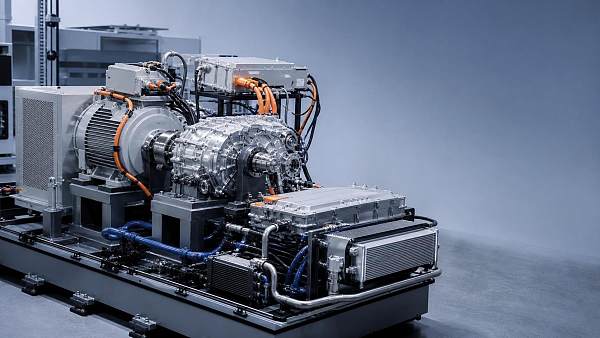
In 2026, ev powertrain efficiency benchmarks automotive teams use are becoming far more demanding.
Peak motor efficiency still matters, but it no longer tells the full engineering story.
The stronger signal is system behavior across temperature, load, software state, and duty cycle.
That shift is changing how procurement teams, validation groups, and benchmark platforms compare suppliers.
For Global Industrial Matrix, this is exactly where cross-sector benchmarking becomes useful.
An EV powertrain is not a single component decision.
It is a coordinated electrical, thermal, mechanical, and software system with measurable tradeoffs.
So the practical question is simple: which benchmarks actually predict real fleet performance and lifecycle value?
Why old efficiency claims are no longer enough
Many headline claims still center on maximum motor output or a single peak efficiency point.
That creates a clean marketing number, but it often hides losses elsewhere in the drive system.
In practice, battery discharge, inverter switching, gearbox friction, cooling load, and software calibration all interact.
A powertrain that looks strong on a lab sheet can drift badly under sustained urban stop-start duty.
The same can happen during highway cruising, towing, cold starts, or repeated fast charging.
This is why ev powertrain efficiency benchmarks automotive programs trust now focus on battery-to-wheel performance.
They also track how stable that performance remains over temperature bands and component aging.
More importantly, they test whether control software preserves efficiency without creating thermal or durability penalties.
The metrics that really matter in 2026
A useful benchmark framework starts with metrics that connect directly to real operating cost and usable range.
The first is battery-to-wheel efficiency across several load windows, not just one ideal point.
The second is inverter loss behavior at low, medium, and peak current demand.
Wide-bandgap devices have improved results, but switching strategy still decides actual gains.
The third metric is thermal derating onset.
If a system reaches derating too early, published efficiency numbers lose value during long climbs or repeat acceleration.
The fourth is regenerative recovery efficiency under mixed deceleration profiles.
Some systems recover strongly in controlled tests, then perform unevenly in urban traffic.
The fifth is software-enabled efficiency retention after firmware updates, fault adaptation, and battery state changes.
That matters because powertrain optimization increasingly lives in code, not only in hardware design.
Core benchmark indicators
- Battery-to-wheel conversion efficiency by drive cycle
- Inverter switching and conduction losses
- Motor efficiency map coverage, not only peak value
- Gear reduction and bearing friction losses
- Thermal stability and derating threshold
- Regenerative braking recovery efficiency
- Software calibration impact on energy use
- Efficiency retention over mileage and calendar aging
Test conditions decide whether comparisons are credible
Even good metrics become misleading when test conditions are vague.
That is one of the biggest problems in ev powertrain efficiency benchmarks automotive buyers still encounter.
A valid comparison needs clear definitions for ambient temperature, battery state of charge, cooling strategy, and load profile.
It also needs repeatable road cycle selection and standardized instrumentation tolerance.
Without that, efficiency spreads between suppliers may reflect test design more than engineering quality.
For technical benchmarking, three conditions are especially important.
- Measure across cold, nominal, and hot operating windows.
- Run multiple duty cycles, including city, highway, gradient, and transient events.
- Document auxiliary loads such as pumps, HVAC impact, and thermal management energy draw.
This is where standards thinking helps, even when no single standard covers everything.
ISO-aligned test discipline, IATF quality controls, and robust traceability improve confidence in benchmark conclusions.
Example comparison framework
How to compare different architectures fairly
Cross-platform comparison is harder in 2026 because architectures are diverging.
Some systems use 400V packs, others 800V, and many combine new semiconductor choices with revised cooling layouts.
Single-speed and multi-speed drive units can also distort direct comparisons.
So ev powertrain efficiency benchmarks automotive teams trust must normalize for vehicle class, payload, and test intent.
A compact passenger EV should not be benchmarked like a delivery van or an off-highway machine.
The same logic applies to supplier screening.
A highly efficient inverter may look attractive, yet integration losses can erase the benefit in another platform.
That is why system-level benchmarking beats component-only ranking.
At GIM, this broader lens matters because industrial hardware rarely succeeds in isolation.
The same benchmarking logic used for HDI substrates or filtration modules applies here: verify performance in operating context.
Common mistakes in EV powertrain efficiency benchmarks
Several errors keep appearing in technical reviews.
The first is treating peak motor efficiency as a purchasing shortcut.
The second is overlooking software versions during comparison.
A firmware revision can shift regen recovery, thermal behavior, and torque response enough to change rankings.
The third is skipping degradation testing.
A system that starts strong but loses efficiency after cycling creates hidden lifecycle cost.
The fourth is failing to separate auxiliary load influence from core drivetrain behavior.
That can make one architecture look weaker when the real issue is thermal management overhead.
Finally, some teams still compare claims from different labs without checking measurement method alignment.
That undermines the value of any benchmark table, however polished it looks.
A stronger review checklist
- Request full efficiency maps, not summary points
- Tie every result to defined ambient and SOC conditions
- Confirm software build and control strategy version
- Check derating onset during sustained load
- Include aging, repeatability, and traceability data
- Compare system efficiency, not isolated component claims
What technical teams should do next
The most useful ev powertrain efficiency benchmarks automotive teams build in 2026 are practical, repeatable, and system-based.
They combine battery-to-wheel efficiency, thermal resilience, inverter behavior, software control, and lifecycle retention.
They also normalize for use case, because architecture value depends on operating reality.
From a decision standpoint, that means moving beyond attractive headline numbers.
Focus on verifiable test discipline, transparent assumptions, and cross-platform comparability.
In real business settings, this reduces sourcing risk and improves confidence in long-term efficiency claims.
For organizations using GIM-style intelligence, the advantage is broader context.
Benchmarking is strongest when technical data, standards logic, and supply chain visibility work together.
That is what separates a plausible efficiency story from defensible engineering value in 2026.
The Archive Newsletter
Critical industrial intelligence delivered every Tuesday. Peer-reviewed summaries of the week's most impactful logistics and market shifts.