Monday, May 22, 2024

Smart Transportation Standards Shaping Connected Mobility
by
Published
Views:
Connected mobility is no longer defined by vehicles alone. It depends on data links, roadside systems, cloud platforms, batteries, sensors, software updates, and shared operating rules. That is why smart transportation standards now sit at the center of transport modernization. They shape how intelligent infrastructure communicates, how digital safety functions are validated, and how mobility networks scale across suppliers, regions, and use cases.
For organizations tracking industrial risk and growth, the topic reaches far beyond traffic technology. It touches automotive engineering, semiconductors, environmental infrastructure, agricultural automation, and the technical governance needed to connect them. In practice, smart transportation standards help turn innovation into something repeatable, auditable, and deployable at system level.
Why Standards Matter in Connected Mobility
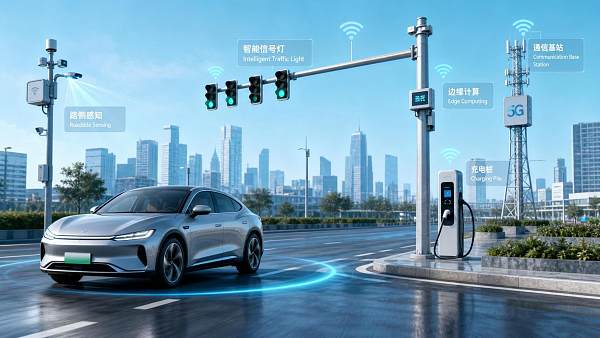
A connected mobility ecosystem includes vehicles, charging assets, signaling equipment, mapping layers, telecom networks, and control software. Without alignment, each layer can work well alone but fail at integration.
Smart transportation standards create a common technical language. They define data formats, communication protocols, safety expectations, cybersecurity controls, testing methods, and lifecycle requirements.
This matters because mobility systems increasingly operate across organizational boundaries. A vehicle platform may depend on chips from one region, sensors from another, and cloud services from a third.
When those components are benchmarked against recognized standards, the path to interoperability becomes clearer. So does the ability to compare vendors, qualify hardware, and reduce deployment uncertainty.
What Smart Transportation Standards Actually Cover
The phrase can sound broad because it is broad. It does not refer to a single framework. It refers to an evolving stack of technical, operational, and compliance rules.
Some standards focus on functional safety and software integrity. Others address wireless communication, vehicle-to-everything connectivity, charging interfaces, emissions reporting, traffic data exchange, or asset maintenance records.
In mobility programs, several standard families often overlap. ISO supports management systems and technical validation. IATF guides automotive quality discipline. IPC shapes electronics reliability and manufacturing consistency.
That cross-disciplinary overlap is where many programs become difficult. A smart bus corridor, for example, can involve embedded boards, battery systems, environmental enclosures, software assurance, and public infrastructure interfaces.
A platform such as Global Industrial Matrix approaches this challenge from a system perspective. By benchmarking hardware and industrial capabilities across sectors, it becomes easier to see how mobility performance depends on upstream technical choices.
Key domains usually involved
- Vehicle systems, including powertrains, braking controls, sensors, and onboard software
- Infrastructure assets, such as traffic signals, charging stations, monitoring nodes, and communications gateways
- Data architecture, including interoperability, latency, identity management, and cybersecurity
- Manufacturing quality, traceability, and supplier qualification across critical components
- Sustainability and reporting requirements linked to lifecycle efficiency and environmental performance
Why the Topic Is Gaining Urgency
Connected mobility has moved from pilot programs to operational infrastructure. That change raises the cost of inconsistency. Interoperability problems are no longer experimental setbacks. They can become public reliability issues.
At the same time, mobility systems are being asked to do more. They must support electrification, automated operations, energy coordination, predictive maintenance, and secure data exchange across public and private networks.
Regulatory expectations are also tightening. Cross-border deployments face different approval pathways, documentation rules, and technical baselines. Smart transportation standards help translate that complexity into manageable decision criteria.
Supply chain volatility adds another layer. A mobility program may be delayed not because a concept is weak, but because a component fails certification, a supplier cannot document traceability, or a subsystem cannot integrate cleanly.
What leaders are watching closely
Where These Standards Create Business Value
The value of smart transportation standards is often clearest before deployment. They make early-stage evaluation more disciplined by forcing clearer requirements around reliability, compatibility, and evidence.
That improves procurement quality. It also helps avoid technology lock-in, where one proprietary interface limits future expansion or raises switching costs later.
In operating environments, standards support smoother maintenance and upgrades. A fleet management platform can exchange data more reliably when naming conventions, interface structures, and test criteria are already normalized.
There is also a strategic benefit. Programs built around strong standards discipline tend to be easier to finance, insure, audit, and replicate across sites.
This is one reason cross-sector benchmarking matters. A mobility initiative can depend on HDI substrates, power electronics, filtration systems, charging assets, and precision tooling quality, even when those dependencies are not obvious at board level.
Typical Scenarios Across Industries
Smart transportation standards are most useful when viewed through actual deployment contexts rather than abstract policy language.
Urban and regional mobility networks
Transit electrification, traffic coordination, roadside sensing, and connected ticketing all rely on standard alignment. Problems often emerge where infrastructure and vehicle data models were never designed together.
Industrial logistics and ports
Automated yard vehicles, warehouse routing, access control, and environmental monitoring create dense operational interfaces. Standards help synchronize performance, safety boundaries, and maintenance workflows.
Agricultural and off-road mobility
Autonomous tractors and connected field equipment extend the mobility conversation beyond roads. Here, smart transportation standards overlap with telematics, machine control, energy systems, and remote diagnostics.
Environmental infrastructure support
Fleet depots, charging hubs, water treatment interfaces, and energy management systems may share digital infrastructure. Standardized integration reduces hidden friction between mobility assets and facility operations.
How to Evaluate Smart Transportation Standards in Practice
A useful starting point is to map standards against operational decisions, not only against compliance documents. The key question is where technical inconsistency could slow deployment or create future cost.
That usually means looking beyond the finished vehicle or platform. Components, firmware, enclosures, manufacturing methods, and supplier process maturity all influence real-world mobility performance.
A practical review framework
- Identify the interfaces that must work across organizations, systems, and regions
- Separate mandatory compliance needs from preferred design practices
- Check whether suppliers can provide verifiable test, quality, and traceability records
- Review cybersecurity and software update governance as part of core system architecture
- Assess whether current choices will still support scaling, maintenance, and cross-platform integration
In many cases, the strongest signal is not a claim of compliance. It is the consistency of evidence across manufacturing, validation, and field performance.
This is where technical benchmarking platforms add value. They help compare products and subsystems within a broader industrial context instead of treating each procurement decision as an isolated event.
What to Watch Next
The next phase of connected mobility will likely place greater emphasis on harmonization. Smart transportation standards will need to connect digital trust, energy coordination, resilient electronics, and asset lifecycle transparency.
That shift favors organizations that treat standards as operational infrastructure, not paperwork. It also favors those that can see links between semiconductors, vehicle systems, ESG requirements, and critical industrial inputs.
A sensible next step is to review where mobility plans depend on hidden cross-sector assumptions. From there, compare the relevant smart transportation standards, supplier evidence, and system integration risks side by side.
The goal is not to chase every framework at once. It is to build a clearer decision baseline, one that supports interoperability today and resilience as connected mobility becomes more complex.
- electronics
- semiconductors
- Mobility
- Smart Transportation
- sensors
- automotive engineering
- smart transportation
- autonomous tractors
- filtration systems
- energy management
- HDI substrates
- Precision tooling
- Technical benchmarking
- Environmental infrastructure
- smart transportation standards
- Mobility systems
- power electronics
The Archive Newsletter
Critical industrial intelligence delivered every Tuesday. Peer-reviewed summaries of the week's most impactful logistics and market shifts.