Monday, May 22, 2024

Bulldozers for Site Prep: What Affects Grade Control and Efficiency
by
Published
Views:
Bulldozers for Site Prep: What Affects Grade Control and Efficiency
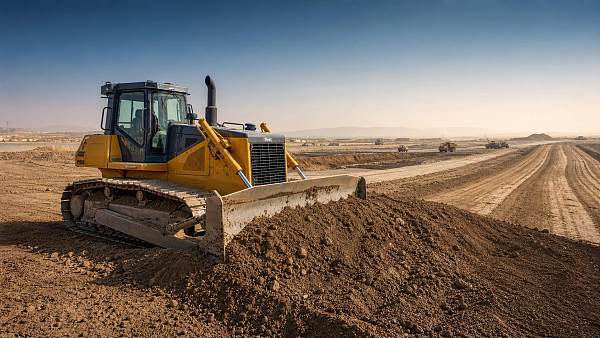
For site preparation, bulldozers do far more than push soil. They shape drainage, access, subgrade consistency, and the pace of every crew that follows.
That is why grade control and efficiency matter so much. A small deviation early often becomes expensive rework later.
In practical terms, the performance of bulldozers depends on a mix of machine setup, material behavior, operator decisions, and digital guidance tools.
When those factors align, crews cut passes, reduce fuel burn, and hold design grade with fewer corrections. When they do not, schedules start slipping.
From a project delivery view, understanding what affects bulldozers helps teams make better equipment choices and protect downstream productivity.
Why bulldozers still anchor site prep
Excavators, graders, and compactors all matter. Still, bulldozers remain central in rough grading, stripping, spreading, slot dozing, and finish prep support.
They are often the first machines to establish working surfaces. That first layer affects haul access, safety, water movement, and the accuracy of every next operation.
More importantly, modern bulldozers now combine raw pushing power with GNSS, IMU sensors, auto blade control, and telematics.
This changes how teams think about grade control. It is no longer only about operator feel. It is also about data quality and machine integration.
Core factors that affect grade control
Several factors influence how well bulldozers hold grade. The most important issue is not one single variable. It is the interaction between them.
1. Blade type and setup
Straight blades, semi-U blades, and full U blades behave differently. Each changes material retention, spill characteristics, and fine control response.
For finish-sensitive work, the wrong blade increases side spill and uneven carry. That leads to more cleanup passes and weaker grade consistency.
Cutting edge wear matters too. Worn edges make bulldozers less predictable, especially on mixed material where hard spots and loose fill alternate.
2. Ground conditions and moisture
Soil type changes everything. Clay, sand, fractured rock, and demolition fill each respond differently under the blade.
Moisture is often the hidden variable. Wet material can stick, roll, and tear. Dry material may ravel, drift, and fail to hold a clean edge.
That means bulldozers may perform well one day and struggle the next on the same pad. The material changed, even if the machine did not.
3. Track condition and undercarriage health
Grade control starts at the ground contact point. Loose track tension, uneven wear, and undercarriage damage reduce stability and create pitch variation.
Even advanced bulldozers cannot fully compensate for mechanical inconsistency. The machine must ride smoothly before the blade can cut smoothly.
4. Slope, haul distance, and pass planning
Pushing uphill, across slope, or over long distances changes blade load and cycle time. Efficiency drops fast when bulldozers exceed their best push range.
Short, planned pushes usually improve control. Random movement patterns often create ridges, soft pockets, and excess overlap.
What drives bulldozer efficiency on real projects
Efficiency is not only speed. For bulldozers, true efficiency means moving the right material, to the right place, with the fewest passes.
That definition matters because fast production without grade accuracy usually creates hidden cost. Rework wipes out the early gain.
Operator technique
Experienced operators read material movement, machine pitch, and blade load almost instantly. They adjust before errors become visible.
That judgment remains valuable, even with smart bulldozers. Automation helps, but smooth inputs and disciplined pass control still decide final output.
Machine size matching
Oversized bulldozers can be inefficient on tight pads. Smaller units may underperform in dense cut sections or long push applications.
The right match depends on material density, cut depth, slope, target finish, and site congestion. One fleet choice rarely fits every phase.
Traffic flow and support sequencing
Bulldozers lose efficiency when haul trucks, survey crews, and compactors interrupt natural cycle patterns. Waiting time quietly destroys daily production.
A better sequence separates rough cut, spread, trim, and compaction windows. That reduces congestion and gives each machine a cleaner work envelope.
How technology improves grade control
Recent changes are making bulldozers more measurable and more repeatable. That is especially useful on large, multi-crew site preparation programs.
GNSS machine control helps bulldozers follow design surfaces without constant stakes. Auto blade functions reduce overcut and improve finish consistency.
IMU and inertial correction systems also help when satellite visibility drops near structures, trees, or steep embankments.
Telematics adds another layer. It shows idle time, fuel use, travel patterns, and blade activity, making inefficiency easier to spot and correct.
From a benchmarking perspective, this is where data platforms like Global Industrial Matrix become useful. Cross-sector equipment intelligence helps compare machine performance, component reliability, and digital readiness against broader operational standards.
That wider view matters because bulldozers now operate inside connected project ecosystems, not as isolated iron on a dirt pad.
Common risks that reduce grading quality
Several issues repeatedly undermine bulldozer performance. Most are avoidable with better planning and field discipline.
- Poor model data or outdated design files in machine control systems.
- Inconsistent moisture across the pad, causing uneven cutting and fill behavior.
- Worn cutting edges, loose tracks, or deferred undercarriage maintenance.
- Too many machines working the same zone without a clear movement plan.
- Using bulldozers for finish work beyond their practical precision range.
More often than not, quality loss starts as a small field compromise. Then it expands into survey correction, compaction delay, and drainage rework.
A practical decision framework for better results
If the goal is better grade control and stronger efficiency, a simple framework works well. Keep it operational and measurable.
- Define the target surface and tolerance before production starts.
- Match bulldozers to material type, push distance, and finish requirement.
- Inspect blade edges, tracks, and calibration at the start of each shift.
- Sequence crews to minimize waiting, crossing, and repeated disturbance.
- Track pass count, fuel burn, and rework volume as core field metrics.
- Review telematics and survey feedback weekly, then adjust operating patterns.
This approach keeps bulldozers tied to outcomes, not just machine hours. That shift usually reveals where productivity is actually being lost.
Benchmarking bulldozers for smarter site preparation
The bigger signal across heavy equipment is clear. Buyers and project teams increasingly want proof, not assumptions.
For bulldozers, that means comparing not only horsepower and blade size, but also control system maturity, uptime patterns, component durability, and digital interoperability.
In real business settings, cross-industry benchmarking can reduce procurement risk. It can also support better fleet standardization across regions and project types.
That is where a technical intelligence platform like GIM adds value. It connects equipment decisions with broader manufacturing quality, compliance expectations, and operational resilience.
Final takeaway
Bulldozers affect far more than earthmoving speed. They influence grade accuracy, drainage performance, labor coordination, fuel use, and rework exposure.
The most reliable results come from treating bulldozers as part of a controlled system. Machine setup, operator inputs, soil behavior, and digital tools must work together.
If site preparation quality needs to improve, start by measuring where grade loss begins, where cycles stall, and where machine capability no longer matches field conditions.
That practical review often creates the fastest gains. It also helps future bulldozer decisions become more accurate, more efficient, and much easier to defend.

The Archive Newsletter
Critical industrial intelligence delivered every Tuesday. Peer-reviewed summaries of the week's most impactful logistics and market shifts.